Model Architectures in Text:
Automatic Mermaid & PlantUML Synthesis
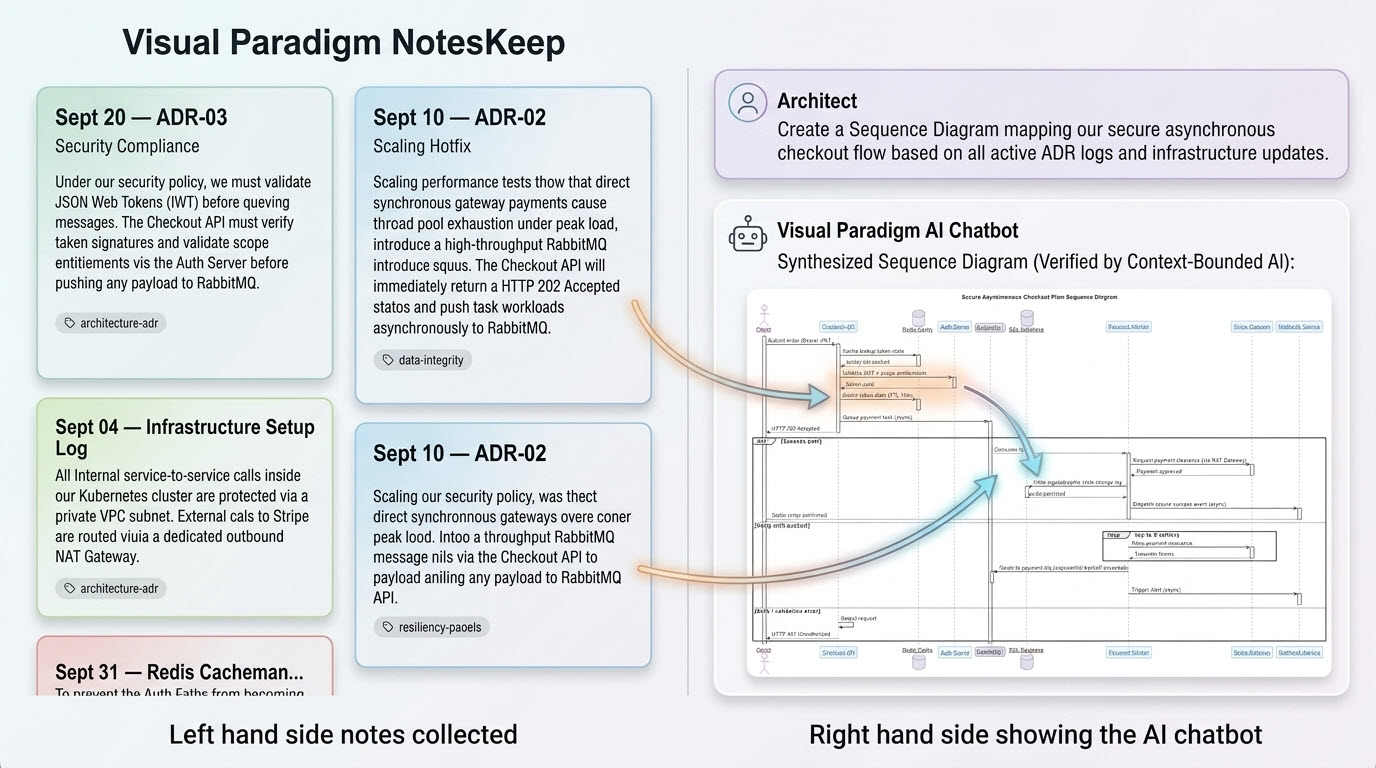
Stop manually dragging system boxes in clunky visual software editors. Leverage NotesKeep (a leading AI note taking tool)'s context-bounded AI to analyze separate Architectural Decision Records (ADRs), chronological system notes, and scaling retro records collected across teams. Let AI auto-compile clean, unified system topologies, databases, and UML diagrams instantly.
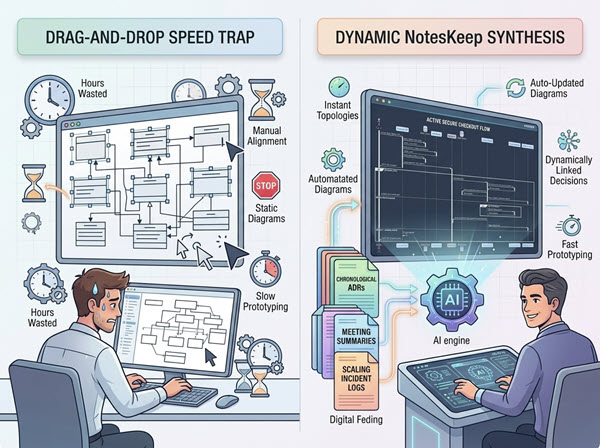
The Drag-and-Drop Speed Trap
Software architects need to conceptualize systems topologies quickly. However, standard design tools force them to waste hours manually dragging lines, aligning boxes, and fixing visual coordinates. This slows down technical prototyping.
With NotesKeep, your diagrams are never static. By feeding your chronological ADRs, meeting summaries, and scaling incident logs directly into our context-bounded modeling AI, you generate auto-updated system sequences and topologies that stay dynamically linked to the latest decisions.
Zero Vendor Lock-In Sandbox Formats
Export your system models in modern open-source layouts for flexible systems mapping.
Mermaid.js
Generate flowcharts, sequence diagrams, and state charts in Mermaid format, making system mapping frictionless inside developer wiki files.
Markdown-Native Rendering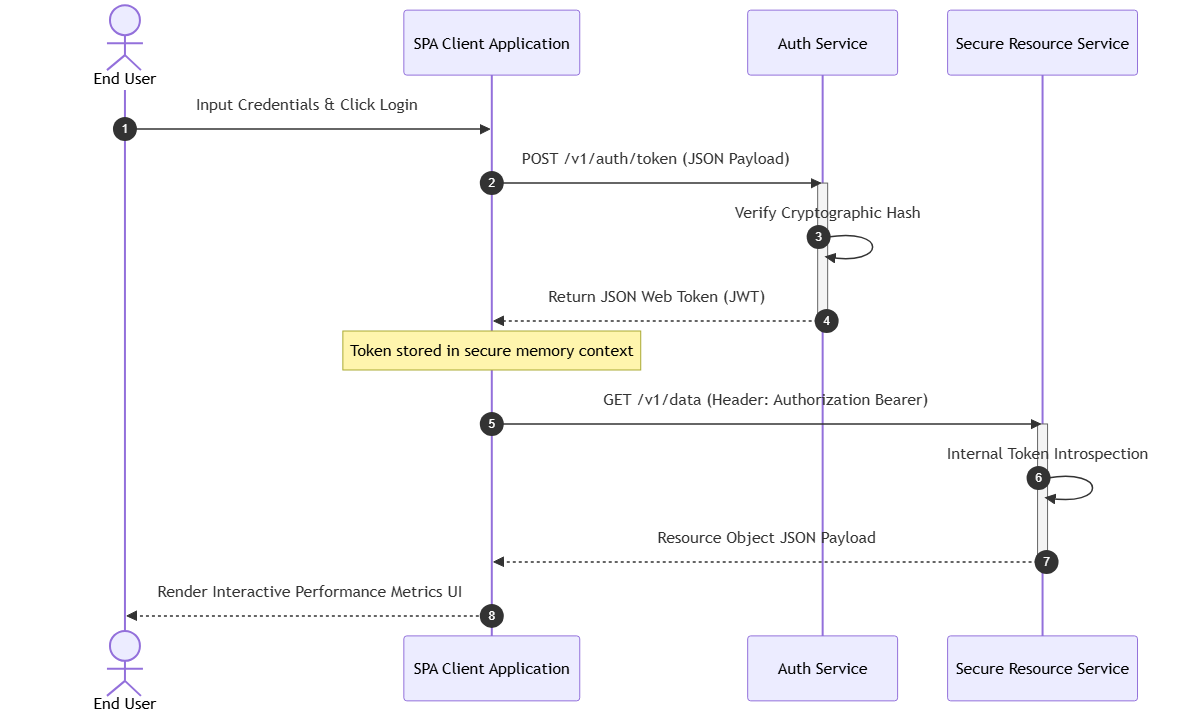
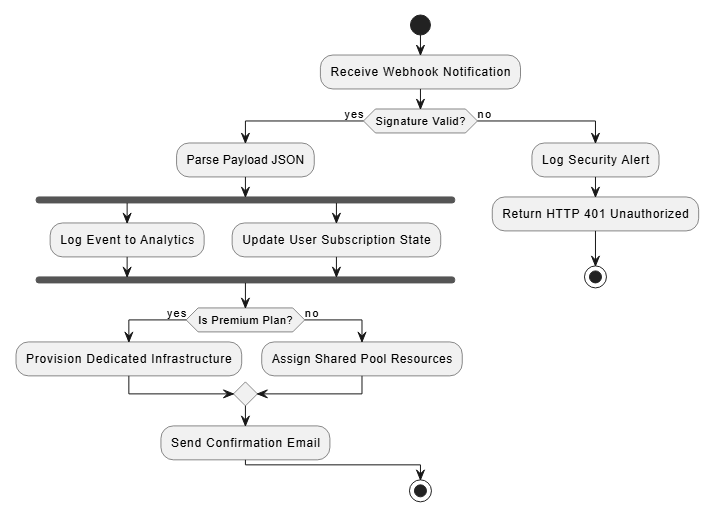
PlantUML
Generate clean, compliant PlantUML diagrams for massive software architecture and interface blueprints without dragging boxes.
Enterprise UML BlueprintsDBML SQL Schemas
Synthesize database relational layouts using standard Database Markup Language, bridging raw specification with backend DB files.
Relational Entity Maps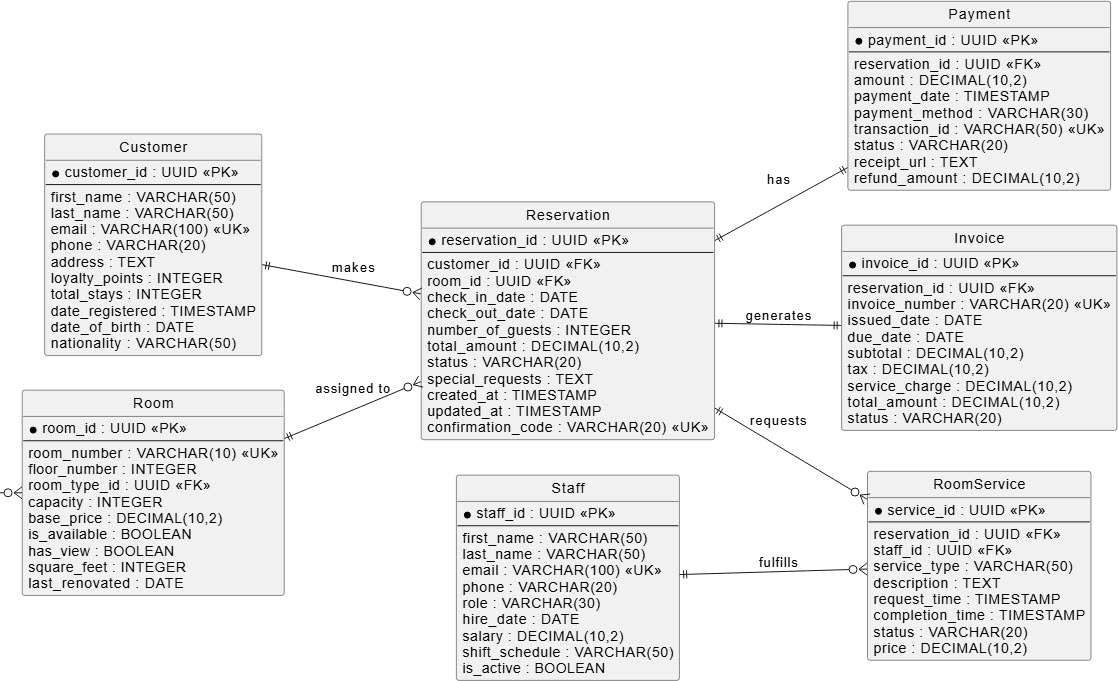
Frequently Asked Questions
Got questions about modeling high-scale topologies? We have answers.
Does NotesKeep support diagram-as-code modeling?
Yes. NotesKeep enables architects to compile requirements models side-by-side using standard diagram-as-code environments including PlantUML, Mermaid, and DBML schemas.
How does VPasCode sync diagrams with IDEs?
VPasCode synchronizes your requirements models and diagram-as-code scripts directly into your development directories, keeping specifications perfectly aligned with your active development files.
Can we model C4 architecture diagrams?
Absolutely. The companion AI Diagramming Chatbot specializes in converting text-based systems objectives into multi-tiered C4 context, container, and component models on the visual canvas.
Start Modeling in Text Today
Stop dragging shapes. Write system specifications declaratively and let AI do the drawing.