In Agile and Scrum frameworks, effective planning is the engine that drives predictable, high-value delivery. However, planning is not a monolithic activity; it is split into two distinct but deeply interconnected processes: Backlog Planning (often referred to as Product Backlog Refinement or Grooming) and Sprint Planning.
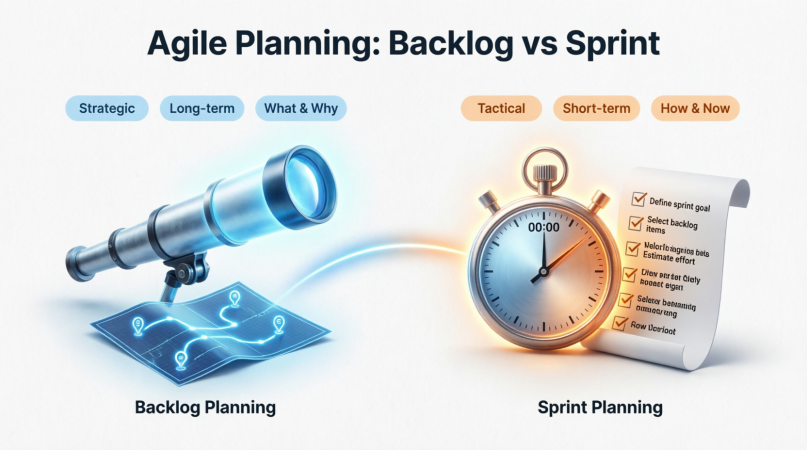
Understanding the differences, responsibilities, and best practices for each is critical for any Agile team aiming to maximize value and maintain a sustainable pace.
1. Key Concepts Defined
What is Backlog Planning?
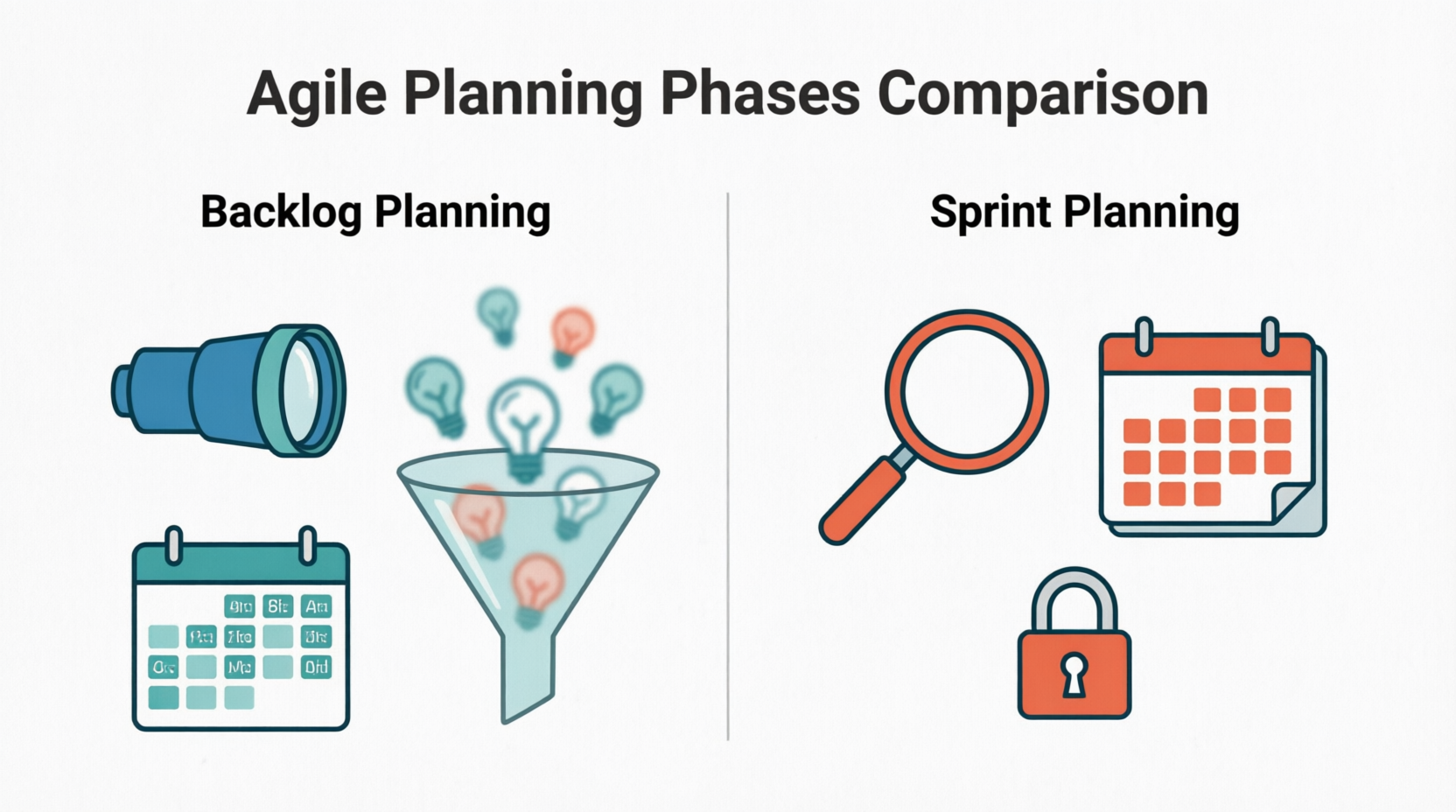
Backlog Planning is the ongoing, strategic process of reviewing, prioritizing, estimating, and detailing items in the Product Backlog. Its primary goal is to ensure that the backlog is always "ready" (DEEP: Detailed appropriately, Estimated, Emergent, Prioritized) for future Sprint Planning sessions. It is a macro-level activity focused on the what and why over a longer time horizon (e.g., the next 2–3 months).
What is Sprint Planning?
Sprint Planning is a formal, time-boxed Scrum event that kicks off the Sprint. Its purpose is to define what can be delivered in the upcoming Sprint and how that work will be achieved. It is a micro-level activity focused on the immediate future (e.g., the next 1–4 weeks), resulting in a Sprint Goal and a Sprint Backlog.
2. Core Differences: Backlog Planning vs. Sprint Planning
| Dimension |
Backlog Planning (Refinement) |
Sprint Planning |
| Primary Purpose |
Prepare, clarify, and prioritize future work. |
Select work for the current sprint and plan how to do it. |
| Time Horizon |
Mid-to-long term (next 2–3 sprints or more). |
Short term (the upcoming 1–4 week sprint). |
| Frequency |
Continuous/Ongoing (often 5–10% of a sprint's capacity). |
Once per sprint, at the very beginning. |
| Duration |
Flexible, ongoing discussions (no strict timebox, but kept efficient). |
Strictly time-boxed (max 8 hours for a 1-month sprint; proportionally less for shorter sprints). |
| Primary Output |
A refined, prioritized, and estimated Product Backlog. |
A Sprint Goal and a committed Sprint Backlog (with tasks). |
| Level of Detail |
High-level acceptance criteria, rough estimates (e.g., Story Points). |
Granular task breakdown, hourly estimates, technical design. |
| Can items be changed? |
Yes, constantly. The backlog is emergent. |
No, not without renegotiating with the Product Owner and risking the Sprint Goal. |
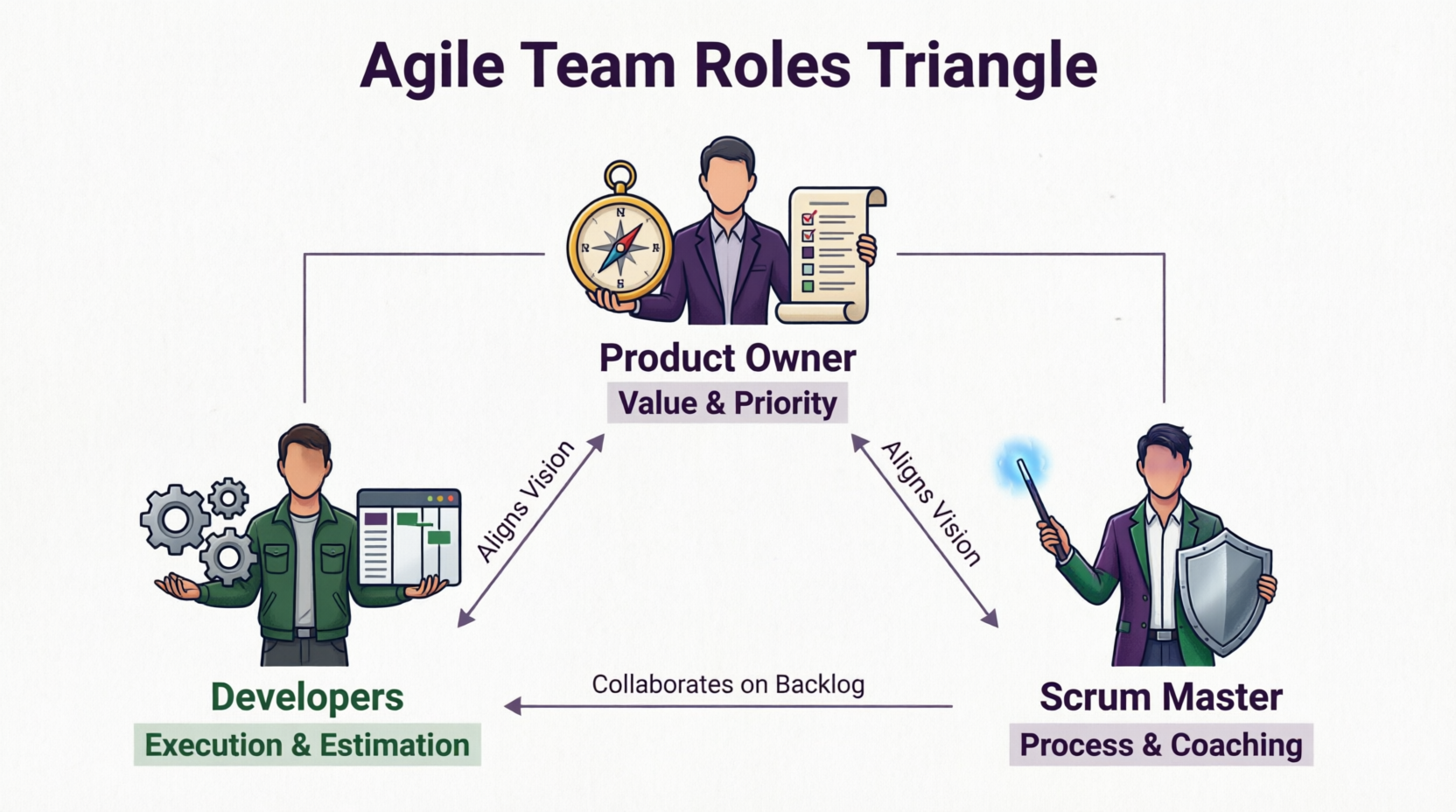
3. Roles and Responsibilities: Who is Responsible for What?
In Scrum, there are three core roles: the Product Owner (PO), the Scrum Master (SM), and the Developers. Here is how their responsibilities divide across the two planning activities.
A. Product Owner (PO)
- Backlog Planning:
- Solely responsible for the order and content of the Product Backlog.
- Clarifies business value, user needs, and acceptance criteria.
- Adjusts priorities based on stakeholder feedback and market changes.
- Sprint Planning:
- Proposes the Sprint Goal and brings the top-priority, "ready" backlog items to the meeting.
- Clarifies any last-minute questions the Developers have about the selected items.
- Negotiates scope with the Developers if they determine they cannot complete all proposed items.
B. Developers (Development Team)
- Backlog Planning:
- Asks probing questions to uncover technical complexities and dependencies.
- Provides high-level estimates (e.g., Story Points, T-shirt sizing).
- Suggests splitting large Epics or Stories into smaller, manageable pieces.
- Sprint Planning:
- Solely responsible for deciding how much work they can pull into the Sprint based on their historical velocity and current capacity.
- Breaks selected Product Backlog Items into specific, actionable technical tasks (often estimated in hours).
- Designs the initial architecture or approach to achieve the Sprint Goal.
C. Scrum Master (SM)
- Backlog Planning:
- Facilitates refinement sessions to ensure they are productive and time-efficient.
- Coaches the PO on effective backlog management techniques (e.g., User Story Mapping, MoSCoW prioritization).
- Helps the team improve estimation accuracy over time.
- Sprint Planning:
- Ensures the event takes place, is positive, and stays within the timebox.
- Facilitates the conversation, ensuring the PO and Developers collaborate effectively.
- Watches for and helps remove any immediate impediments to the team's commitment.
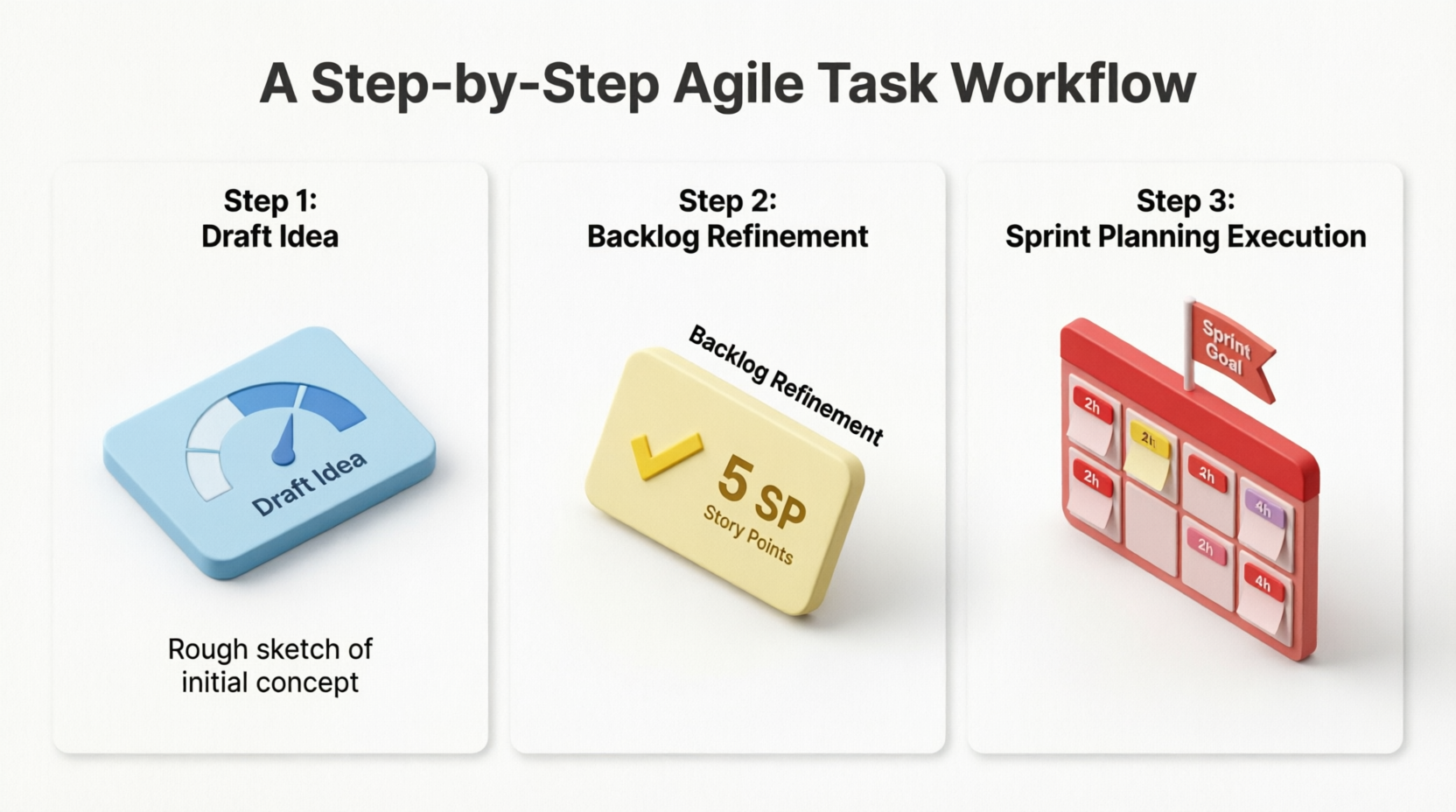
4. Practical Examples
Example 1: Backlog Planning in Action
Context: A team is building a new feature for a SaaS project management tool: "Advanced Reporting Dashboard."
- Preparation: The PO drafts a User Story: "As a Project Manager, I want to export project data to CSV so that I can analyze it in Excel."
- Refinement Session: The PO presents this to the Developers.
- Discussion: Developers ask: "Does this include custom column selection, or just a default dump?" The PO clarifies: "Just default columns for now to keep it simple."
- Action: The Developers realize this requires backend API work and frontend UI work. They suggest splitting it into two stories.
- Outcome: The PO updates the backlog. The two new stories are given a "Ready" status, assigned a priority of "High," and estimated at 5 and 3 Story Points, respectively. They are now ready for a future Sprint Planning.
Example 2: Sprint Planning in Action
Context: The same team is starting a 2-week Sprint.
- The Goal: The PO opens the meeting: "Our Sprint Goal is to enable basic data export for our beta users to gather feedback."
- Selection: The PO points to the refined "Export to CSV (Default)" stories from the previous example.
- Capacity Check: The Scrum Master reminds the team that two developers are on PTO, reducing capacity by 30%.
- Commitment: The Developers review their velocity. They agree they can complete the 5-point backend story and the 3-point frontend story, but not the additional "Custom Columns" story.
- Task Breakdown: The Developers break the 5-point story into tasks: Design DB query (2h), Build API endpoint (4h), Write unit tests (2h).
- Outcome: The team has a clear Sprint Goal and a detailed Sprint Backlog. The Sprint begins.
5. Best Practices for Success
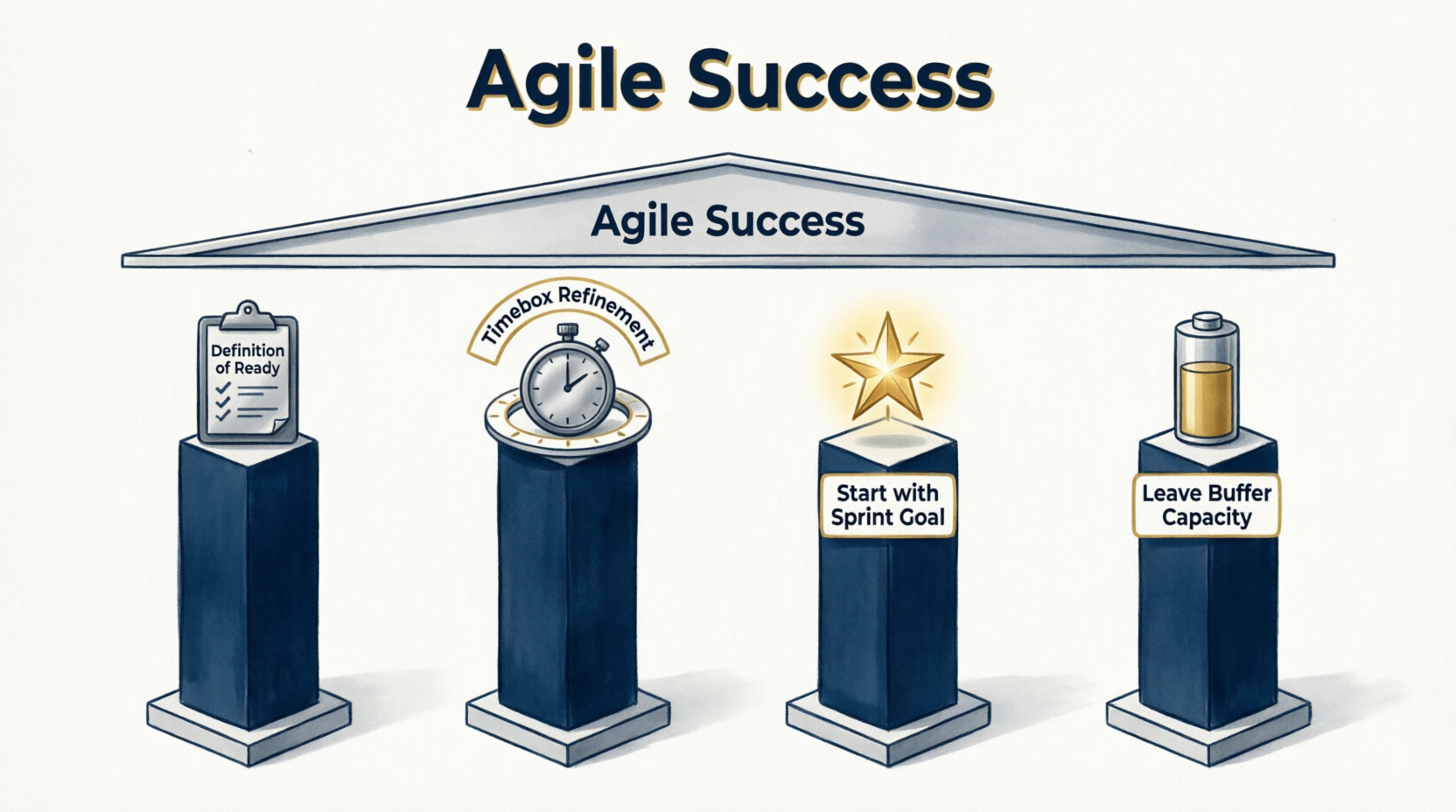
For Backlog Planning (Refinement):
- The "Definition of Ready" (DoR): Establish a shared checklist for what makes a backlog item ready for Sprint Planning (e.g., clear acceptance criteria, dependencies identified, estimated).
- Don't Wait Until Sprint Planning: If you are having deep technical debates during Sprint Planning, your backlog refinement is failing. Refinement should resolve the "unknowns" beforehand.
- Timebox Refinement: Dedicate a specific, recurring time (e.g., 1 hour mid-sprint) to refinement so it doesn't become an ad-hoc, disruptive meeting.
For Sprint Planning:
- Start with the "Why": Always define the Sprint Goal first. It acts as a North Star. If the team gets behind mid-sprint, the Sprint Goal helps them decide what to drop and what to keep.
- Leave Buffer Capacity: Never plan for 100% of a developer's time. Account for meetings, code reviews, bug fixes, and unforeseen interruptions (plan for ~70-80% capacity).
- Focus on Outcomes, Not Just Output: Don't just fill the sprint with stories. Ask, "If we only get one thing done this sprint, what must it be to achieve the Sprint Goal?"
6. Conclusion
Backlog Planning and Sprint Planning are two sides of the same Agile coin.
- Backlog Planning is your strategic map. It ensures you are building the right things and that the path ahead is clear of fog.
- Sprint Planning is your tactical execution. It ensures the team is aligned, committed, and has a concrete, realistic plan to build those things right now.
When Backlog Planning is done well, Sprint Planning becomes a smooth, predictable, and empowering ceremony. When Backlog Planning is neglected, Sprint Planning devolves into a chaotic, stressful guessing game. Master both, and your Agile team will consistently deliver high-value results.