
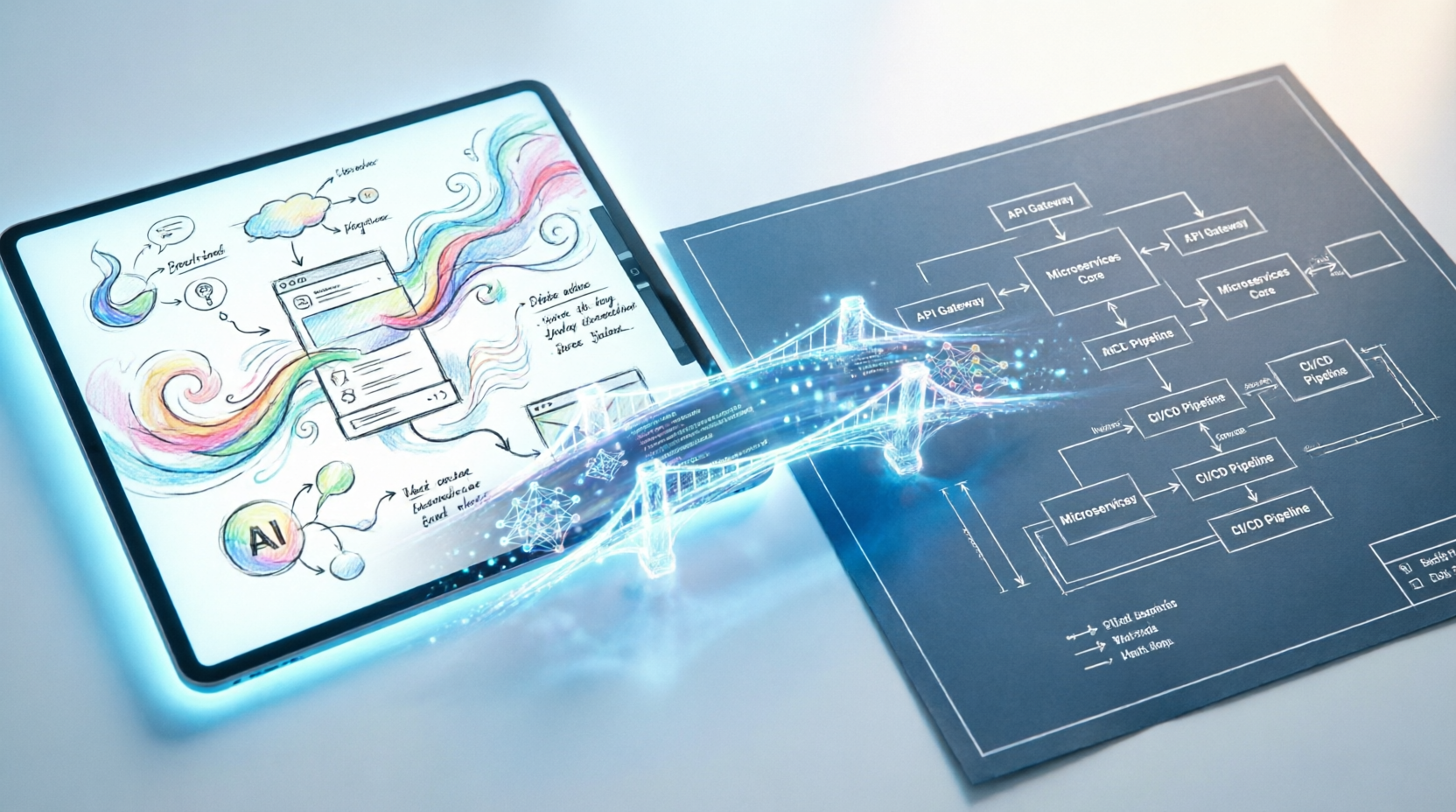
The text from Martin Fowler's UML Distilled captures a classic tension in software engineering: the divide between blueprinters and sketchers. Historically, this divide was defined by a trade-off between precision and velocity. Blueprinters viewed UML as a precise, formal language mapped directly to code, while sketchers used it as a lightweight, conceptual tool to communicate design intent. Detailed blueprinting eventually fell out of favor because the manual overhead of keeping complex diagrams synchronized with fast-moving source code killed developer velocity. However, the emergence of generative AI within advanced modeling platforms like Visual Paradigm has fundamentally shifted this dynamic. AI acts as a bridge that fundamentally changes the trade-offs between sketching and blueprinting, making visual modeling not only compatible with Agile but a core driver of lean delivery.
This case study evaluates how AI transforms the landscape of software design, moving from static documentation to dynamic, intelligent collaboration.
To evaluate how AI changes the game, we must first anchor ourselves in the core perspectives that defined the pre-AI era. The tension between different stakeholders often arose from differing approaches to modeling and the tools available to them.
Behavioral Modeling Dimensions
UML 2 provides three distinct windows into a system's dynamic logic, each serving a critical analytical function:
Interaction Diagrams (Sequence): These map exactly how objects pass messages over time, providing clarity on temporal dependencies and method calls.
State Diagrams: These capture lifecycle changes and event-driven transitions of a single entity, essential for understanding complex object behaviors.
Activity Diagrams: These model procedural, algorithmic logic and parallel workflows, acting as visual flowcharts for business processes.
The Perspective Spectrum
Conceptual Perspective: This approach focuses on building a shared vocabulary of the business domain independent of technology—such as arguing about the meaning of "asset pool" with accountants. It prioritizes communication over implementation.
Software Perspective: This maps visual blocks directly to software interfaces, classes, and execution paths, bridging the gap to implementation.
The Core Conflict
The creators of UML designed a rigid, highly structured meta-model intended for rigorous blueprinting or direct compilation ("UML as a programming language"). However, practitioners overwhelmingly chose sketching. Human text-to-code velocity easily outpaced the manual friction of drag-and-drop diagramming tools. The manual effort required to maintain synchronization between the model and the code became a bottleneck that teams could rarely afford.
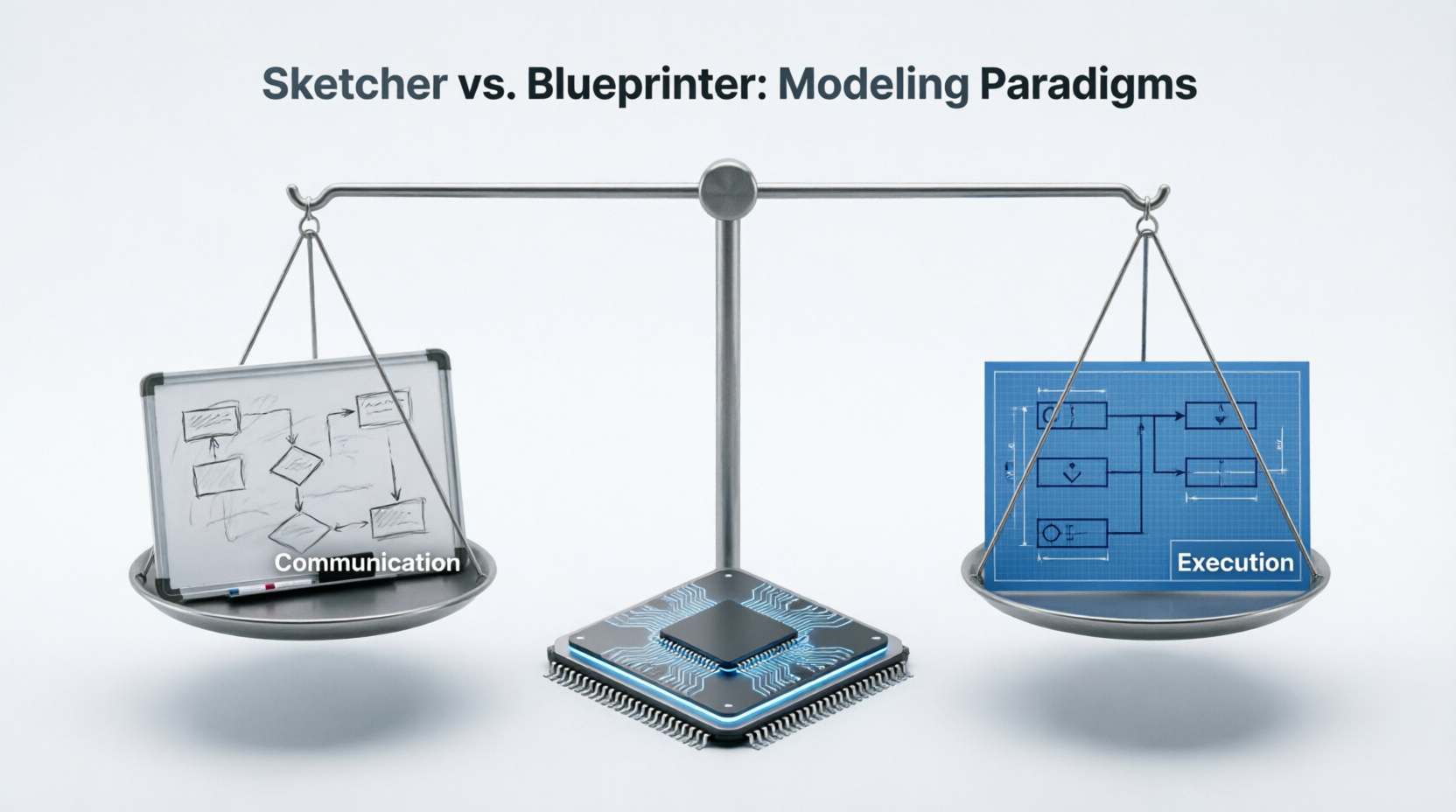
(Visual Context: The tension between sketching for communication and blueprinting for execution, balanced by AI.)
Historically, the answer to whether heavy visual modeling could fit into Agile was "no." It introduced a "waterfall-by-stealth" phase where teams burned weeks drawing static diagrams that became obsolete the moment the first line of code was written. With AI, the answer is a definitive yes. The integration of natural language processing and semantic model generation into ecosystems like Visual Paradigm fundamentally eliminates the manual drawing bottleneck. AI transitions visual modeling from a static documentation burden into an interactive, agile design partner.
Why AI Makes Visual Modeling Truly Agile:
Instant Prototyping (Collapsing the Creation Phase): Instead of manually routing lines and configuring multiplicities, architects can use plain English prompts to instantly generate editable, structurally sound UML Class, Sequence, or Activity diagrams. This allows design to happen at the speed of thought, collapsing the creation phase from hours to seconds.
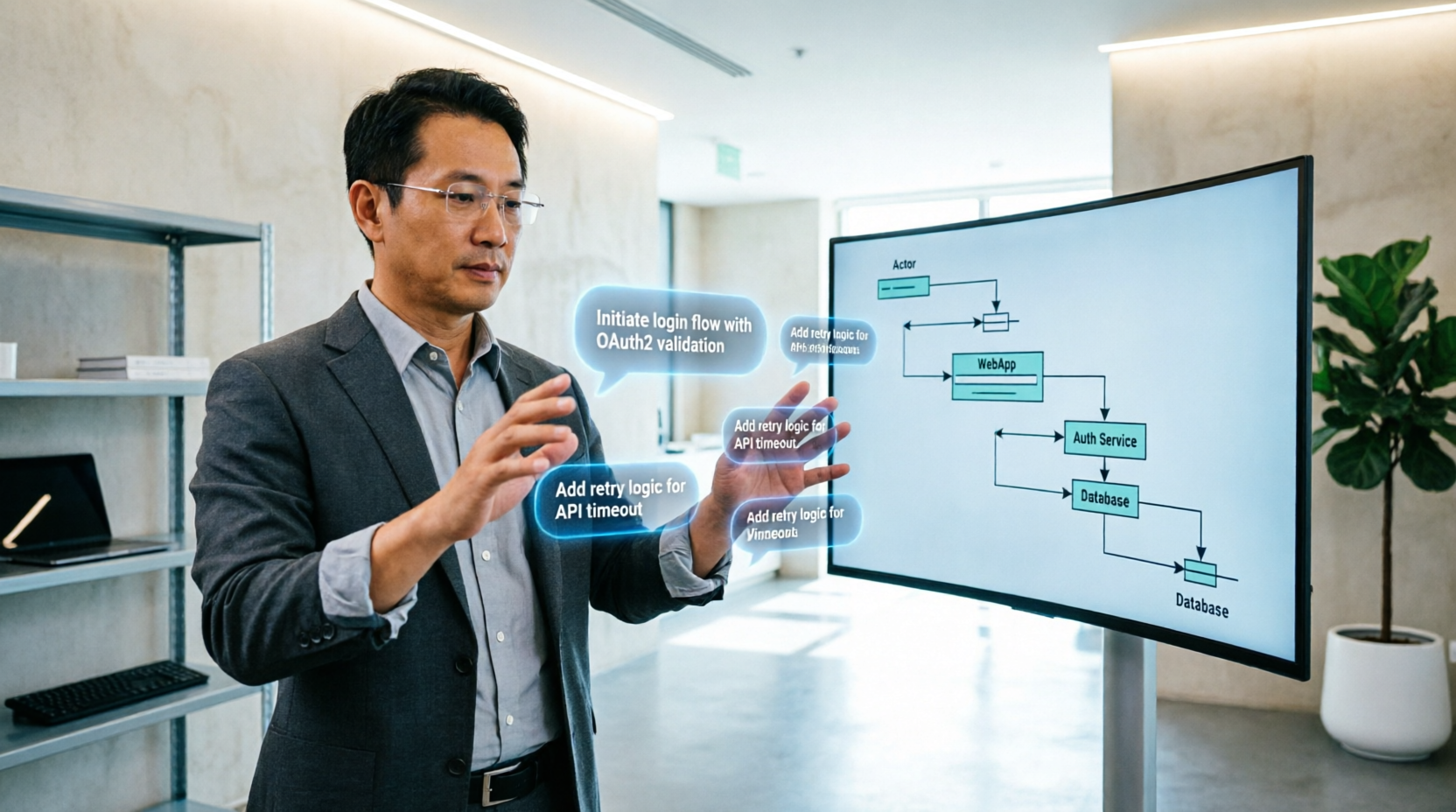
Semantic Flexibility: Unlike generic whiteboarding tools that merely generate dead images, modern AI engines generate live meta-models. If you ask the AI to "add an alternative payment gateway branch," it updates the underlying sequence lifelines, logic blocks (alt/opt), and data structures across the entire repository.
Bi-Directional Synchronicity: AI bridges the gap between source code and diagrams by dramatically accelerating reverse-engineering analysis and automated forward code generation. The diagram becomes a dynamic, living lens over the code base rather than a snapshot trapped in a wiki.
While AI makes visual modeling fast, deploying it across an enterprise Agile process can introduce its own hidden costs: licensing high-tier platforms, token consumption, model maintenance, and the risk of "AI hallucinations" in complex architectures. To successfully scale this without adding crippling overhead, software leaders use a structural, high-ROI framework that focuses human attention only where it provides competitive value.
The Strategy for Lean, High-Velocity Agile Modeling
The execution protocol leverages AI to maximize structural clarity while completely compressing the time spent on manual documentation:
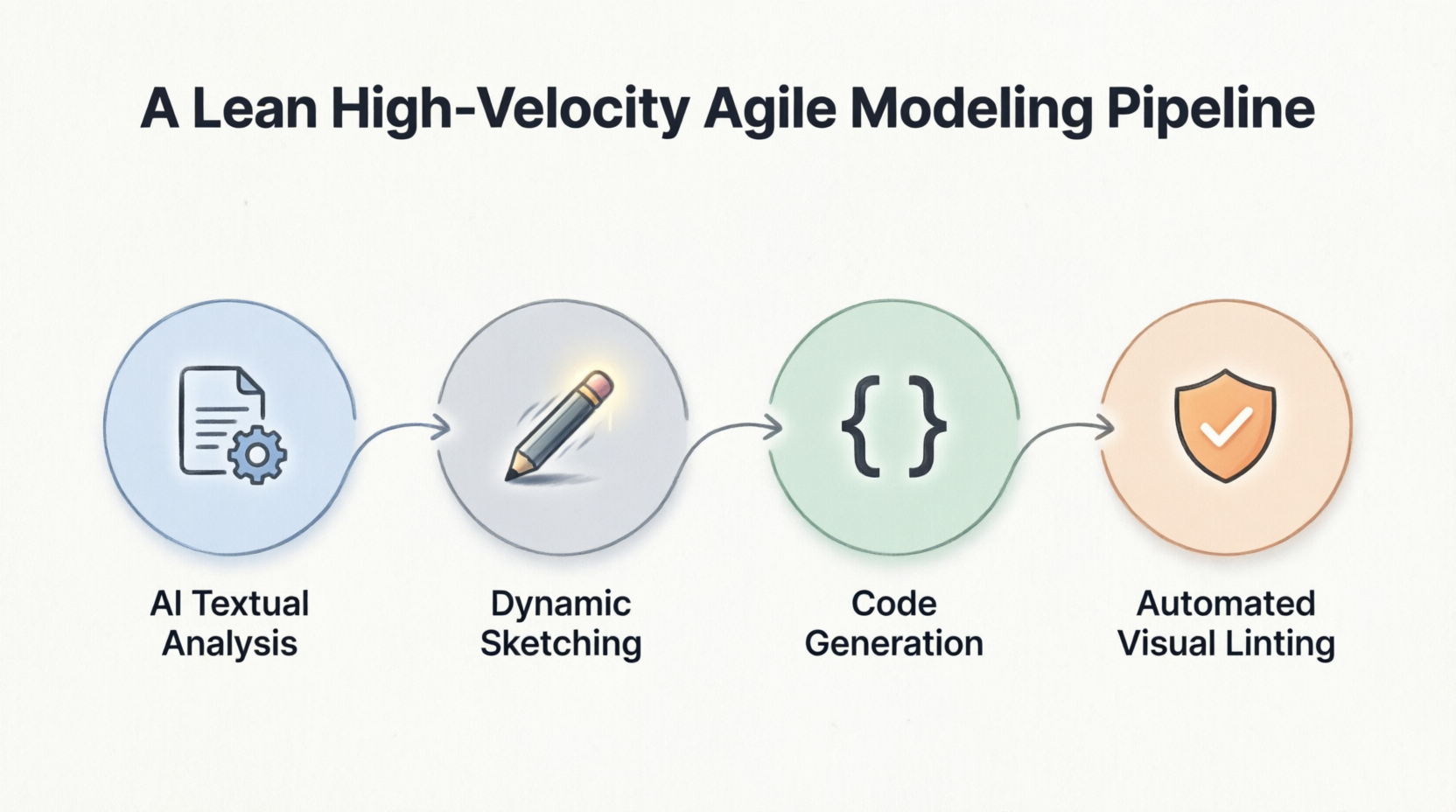
Automate Textual Analysis to Domain Models (Sprint Planning): Instead of manually drafting domain vocabularies, feed unformatted business requirements and user stories directly into the platform's textual analysis engine. The AI parses nouns and verbs to instantly scaffold baseline business entities and Use Case descriptions, establishing a precise, conceptual frame of mind within minutes.
Apply the 20% Rule – Dynamic Sketching (Design & Backlog Refinement): Enforce a strict constraint: never blueprint an entire system. Use conversational AI to generate behavioral models (Sequence and Activity diagrams) only for the top 20% most complex, high-risk business rules or integration touchpoints. Treat the output as a collaborative sketch to gain team consensus before writing code.
Generate Clean, Strongly-Typed Boilerplate (Development Phase): Once the sketch is refined via chat, use forward-engineering modules to export structural class diagrams into clean, language-specific boilerplate (Java, C#, Python, TypeScript). This eliminates manual boilerplate mapping errors and ensures the code base inherits the exact interface definitions agreed upon during refinement.
Deploy Automated Visual Linting (Continuous Integration / Governance): Use the AI's real-time model validation to audit design health. Instead of scheduling lengthy architecture review meetings, let the platform automatically flag missing associations, broken multiplicities, and architectural anti-patterns. This cuts administrative overhead and guarantees structural compliance before code compilation.
(Visual Context: A 4-stage pipeline diagram showing Text Analysis -> Sketching -> Code Generation -> Linting.)
The integration of Generative AI into software modeling does more than just speed up the drawing process; it fundamentally alters the economics of design. Industry data indicates that incorporating generative AI into structured operational modeling workflows reduces early-stage manual diagramming and text-to-visual conversion time by up to 70%. By shifting engineering hours away from tedious drag-and-drop alignment and toward high-level systemic design, teams replace late-stage, reactive code refactoring with rapid, predictive alignment. The "Agile Blueprint" is no longer an oxymoron. Through the power of AI, visual modeling has evolved from a static artifact of the past into a living, breathing asset that drives velocity, clarity, and quality in modern software development.