
Reference models are foundational architectural blueprints provided within the TOGAF framework. They serve as reusable, standardized starting points that help enterprise architects design consistent, interoperable, and future-proof systems. Rather than reinventing architectural foundations from scratch, architects can adapt these models to align with organizational needs, accelerate delivery, and ensure compliance with industry standards.
The TOGAF framework provides two primary reference models:
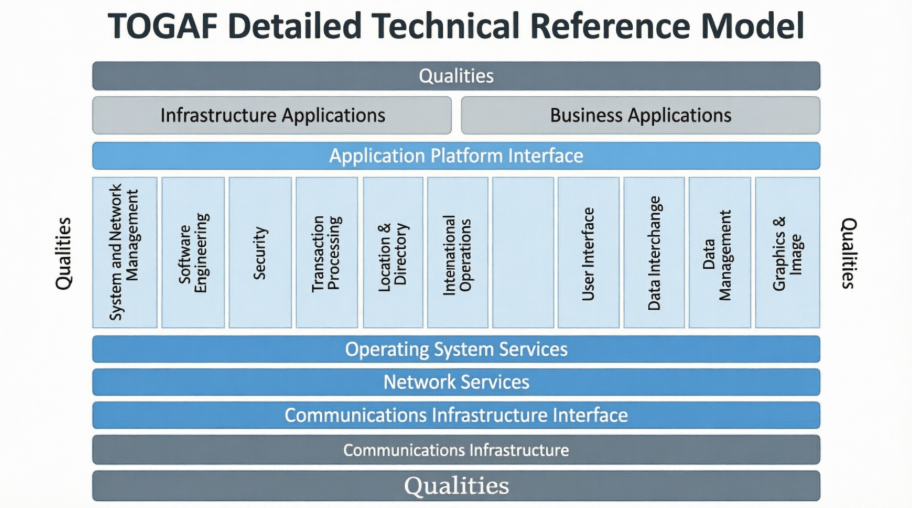
Technical Reference Model (TRM)
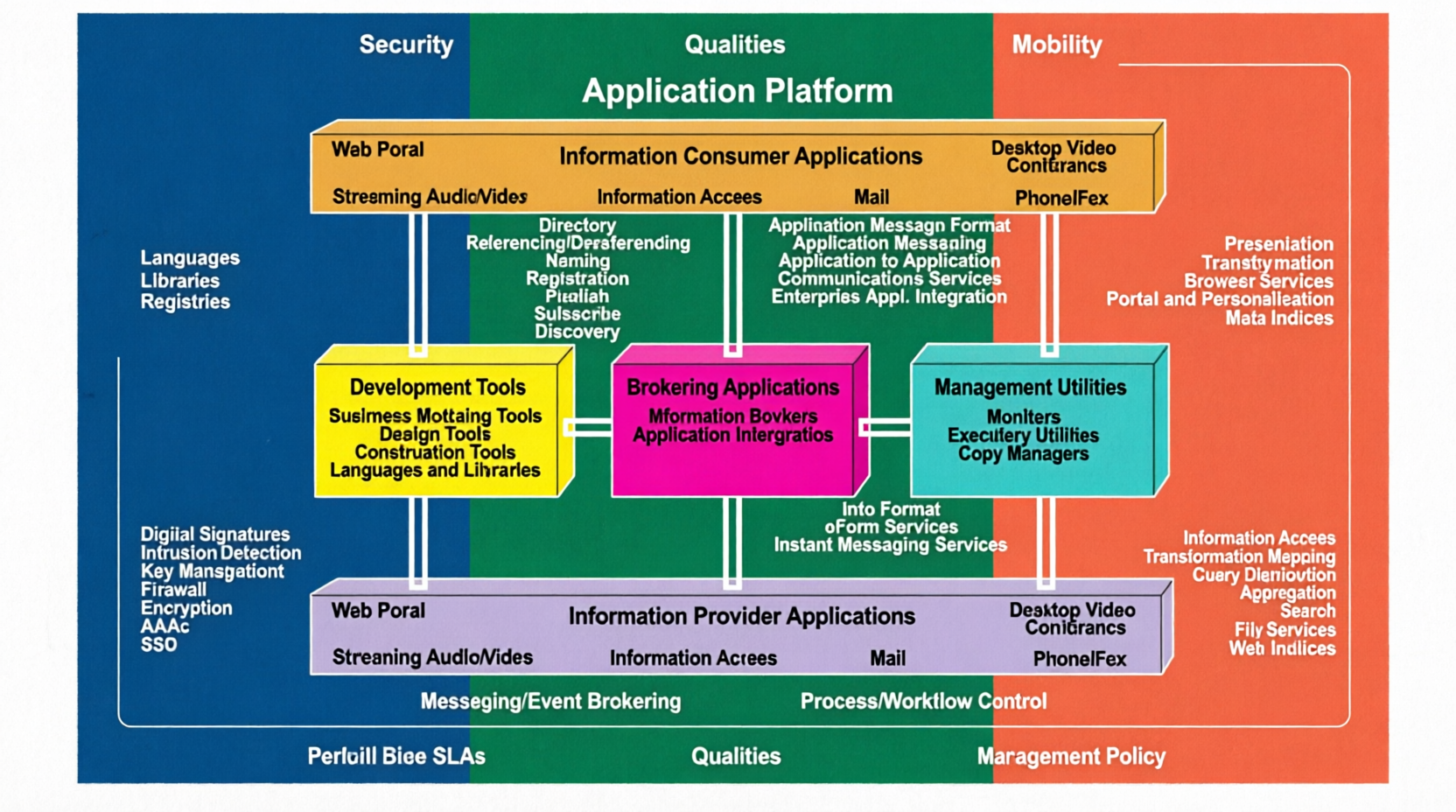
Integrated Information Infrastructure Reference Model (III-RM)
Below is a complete, self-contained breakdown of these models, their purposes, structures, and practical applications.
Before diving into the models themselves, it's essential to understand where they live within TOGAF's architectural taxonomy:
| Concept | Position in Enterprise Continuum | Role |
|---|---|---|
| Foundation Architecture | Left-most (most generic) | Provides universal building blocks and standards that support all computing environments |
| Common Systems Architecture | Slightly right of Foundation | Focuses on specific domains (e.g., security, management, applications) that apply across multiple industries |
| Organization-Specific Architecture | Right-most (most specific) | Tailored architecture for a single enterprise |
The TRM is a Foundation Architecture. The III-RM is a Common Systems Architecture. Both are stored in the Architecture Repository and leveraged during the Architecture Development Method (ADM) cycle.
The TRM is a generic, platform-centric architecture that defines the fundamental services and structural components required to support application portability and reuse. It acts as a universal foundation upon which more specific architectures (like industry or enterprise architectures) can be built.
Platform-Centric: Focuses on the underlying platform services that applications depend on, rather than the applications themselves.
Standards-Driven: Defines open system standards, implementation guidelines, and technology directions.
Environment-Complete: Represents a robust, full-spectrum computing environment.
Reusable Foundation: Provides direction for products, services, and common system architectures.
The TRM consists of two core parts:
Taxonomy: A structured set of terminology that coherently describes the components and conceptual layout of an information system.
Visual Model: A graphical representation that helps architects understand how components interact.
High-Level Architecture Structure:
The TRM is organized into three primary layers, connected by two standardized interfaces:
Application Software Layer: Where business and infrastructure applications reside.
Application Platform Layer: Provides runtime services (e.g., OS, middleware, databases).
Communications Infrastructure Layer: Handles networking, protocols, and data transport.
Interfaces:
Application Platform Interface (between apps and platform)
Communications Infrastructure Interface (between platform and network)
Imagine constructing a commercial building. The TRM is like the universal architectural blueprint for foundations, load-bearing walls, electrical conduits, plumbing risers, and HVAC ducts. It doesn't dictate whether the building will be a hospital, office, or retail space (that's the job of specific applications), but it ensures every structure can safely support those uses, uses standardized materials, and connects reliably to city utilities. If you change the interior layout later, the foundation and utility interfaces remain intact.
As internet-based technologies matured, organizations shifted their focus from platform stability (addressed by the TRM) to application integration and data sharing. The III-RM was developed to address this shift. It focuses specifically on the Application Software space and models the components required to create a unified, interoperable information infrastructure.
While it is narrower in scope than the TRM, it expands significantly on business applications, infrastructure applications, and application brokering services.
Application-Centric: Focuses on how applications interact, share data, and deliver services.
Integration-Driven: Designed to break down information silos and enable seamless data flow.
Common Systems Architecture: Applies across multiple industries and organizational contexts.
Dual-Component Structure: Like the TRM, it consists of a Taxonomy and a Visual Model.
If the TRM is the physical foundation and plumbing, the III-RM is the intelligent wiring and communication network that allows the building's thermostat, security cameras, lighting, and access control to talk to each other. It ensures that when a fire alarm triggers, the doors unlock, lights turn on, and HVAC shuts down automatically, regardless of which vendor manufactured each system. The III-RM models exactly those application-level components and services that make cross-system collaboration possible.
Boundaryless Information Flow is a foundational concept and trademark of The Open Group. It describes the ideal state where information reaches the right people at the right time, securely and reliably, to support operations across an extended enterprise.
Importantly, "boundaryless" does not mean boundaries are removed. It means boundaries become permeable. Information can flow across departments, partners, suppliers, and customers without being blocked by legacy silos or incompatible systems.
Modern enterprises historically built IT systems department-by-department (e.g., separate systems for Finance, HR, Sales). While this optimized functional efficiency, it created data silos that hinder cross-functional collaboration. The III-RM addresses this by:
Modeling the application components and services required for integrated information access
Defining standards for application brokering, data exchange, and service orchestration
Providing architects with a clear blueprint to communicate to leadership how web services, integration platforms, and modern APIs can realize Boundaryless Information Flow
Official Definition: "Access to integrated information to support business process improvements."
Reference models are not theoretical artifacts; they are actively used during the Architecture Development Method (ADM):
| ADM Phase | How Reference Models Are Used |
|---|---|
| Phase C: Information Systems Architectures | Architects reference the III-RM to design Application and Data Architectures that enable integrated information flow and cross-application interoperability. |
| Phase D: Technology Architecture | Architects use the TRM to select underlying platform services, infrastructure standards, and technology components that will support the target applications. |
| Enterprise Continuum & Repository | Both models are stored as reusable assets. Architects adapt them (rather than replace them) to create Organization-Specific Architectures, saving time and ensuring standards compliance. |
Start Generic: Begin with the TRM or III-RM from the Architecture Repository.
Tailor to Context: Adjust service categories, interfaces, or application components to match industry regulations, existing tech stacks, or business goals.
Validate & Populate: Use the models to identify gaps, select COTS products, or design custom services.
Store & Reuse: Document the tailored version back into the Architecture Repository for future projects.
| Concept | What You Need to Remember |
|---|---|
| TRM | Platform-centric, Foundation Architecture, focuses on underlying tech standards and infrastructure layers. |
| III-RM | Application-centric, Common Systems Architecture, focuses on data sharing, app integration, and service brokering. |
| Structure | Both consist of a Taxonomy (terminology & conceptual layout) + a Visual Model (diagrammatic representation). |
| Enterprise Continuum | TRM = Leftmost (generic). III-RM = Middle-left (common systems). Both feed into Organization-Specific Architectures. |
| Boundaryless Information Flow | The business driver behind III-RM. Permeable boundaries enable secure, timely, integrated data access. |
| ADM Usage | III-RM → Phase C. TRM → Phase D. Used as starting points, not rigid mandates. |
TOGAF Reference Models are designed to be adaptable, standards-aligned, and reusable. They exist to prevent architects from reinventing foundational layers for every project. By understanding the distinction between platform-centric (TRM) and application-centric (III-RM) modeling, and by recognizing how they enable Boundaryless Information Flow, beginners can quickly grasp how enterprise architecture transitions from abstract theory to practical, implementable blueprints.
When preparing architectures, always treat these models as living templates: extract what applies, tailor what doesn't, document your adaptations, and feed them back into your organization's Architecture Repository. This iterative reuse is the core of mature, scalable Enterprise Architecture.

